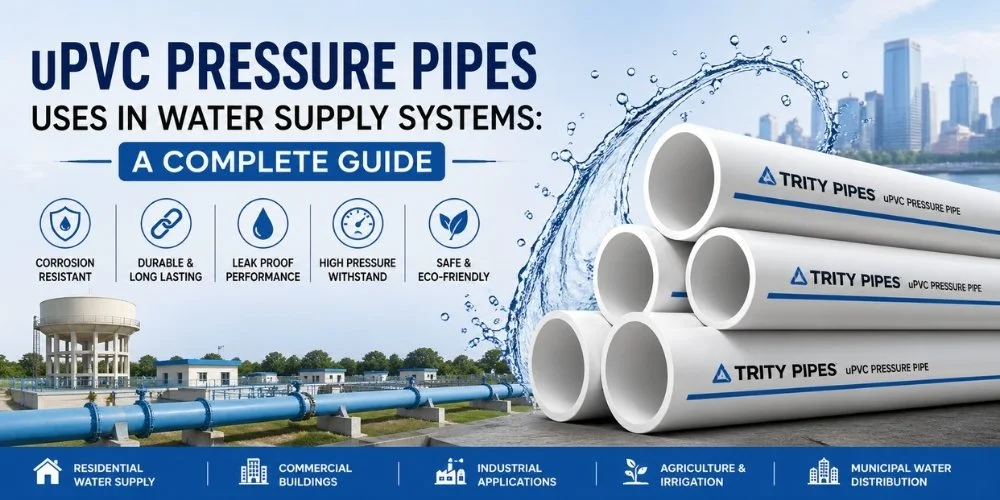
Introduction: When Water Supply Fails, Everything Fails
Ask any builder who has dealt with a burst GI pipe on the fifth floor of an under-construction apartment complex, or a municipal engineer who has spent three nights tracing an underground leakage in a 20-year-old distribution line, and they will tell you the same thing: the pipe material you choose at the beginning determines everything that follows.
India's water supply infrastructure is at a turning point. With rapid urbanization, rising construction activity, and increasing awareness around potable water safety, the demand for reliable, durable piping systems has never been higher. Yet, a significant chunk of our existing networks still relies on galvanized iron or unplasticized PVC pipes that were never designed for modern pressure requirements.
This is where uPVC pressure pipes have quietly become the go-to solution for engineers, contractors, and project planners across the country. Lightweight, corrosion-resistant, long-lasting, and surprisingly cost-effective, these pipes are reshaping how India builds its water supply systems.
What Exactly Are uPVC Pressure Pipes?
uPVC stands for Unplasticized Polyvinyl Chloride. The keyword here is unplasticized, no softening additives are mixed into the compound, which means the pipe retains its rigidity, structural strength, and chemical stability even under sustained pressure.
PVC vs uPVC: A Distinction That Matters
Many people use "PVC" and "uPVC" interchangeably. They shouldn't.
Regular PVC pipes are manufactured with plasticizers to make them flexible, suitable for drainage or low-pressure applications. uPVC pipes, on the other hand, skip those additives entirely, resulting in a much harder, more chemically inert material that can handle:
- Higher working pressures (Class 3, 4, 5, and 6 ratings)
- Aggressive soil conditions in underground applications
- Long-term exposure without leaching harmful chemicals into water
This makes uPVC the right choice specifically for pressure-rated water supply applications, where safety, flow efficiency, and structural integrity all matter simultaneously. If you want a closer look at the specifications, explore Trity Pipes' uPVC Pressure Pipes, the range is built precisely for these demands.
Key Uses of uPVC Pressure Pipes in Water Supply Systems
1. Municipal Water Supply Networks
This is perhaps the largest and most critical application. Municipal corporations across India, whether in metro cities like Bengaluru and Pune or in Tier-2 towns like Nashik or Agra, have been progressively replacing old metal pipelines with uPVC pressure pipes.
The reason is simple math: uPVC pressure pipes offer a lifespan of 50+ years under standard conditions, compared to 10–15 years for GI lines that corrode from the inside. Lower maintenance, fewer interruptions, and no contamination risk from rust or scale buildup make them ideal for potable water piping systems at the municipal level.
2. Residential Plumbing Systems
From high-rise apartments in Hyderabad to independent villas in Jaipur, uPVC pipes have become the standard for residential water supply. They handle the pressure fluctuations that come with overhead tanks, booster pumps, and multi-floor distribution without complaint.
Plumbers who've worked with both GI and uPVC will confirm, the installation time is nearly half, and callbacks for leakage are almost non-existent when quality pipes and proper fittings are used together.
3. Industrial Water Distribution
Factories, manufacturing plants, pharmaceutical units, and food processing facilities all need water distribution systems that don't compromise product purity. uPVC's chemical inertness means it won't react with the water it carries, and its smooth inner surface prevents biofilm formation, a major concern in industrial hygiene standards.
For industries dealing with high pressure water pipes across large campuses, uPVC also offers the advantage of modular, easy-to-expand networks.
4. Agricultural Irrigation
Agriculture accounts for nearly 70% of India's freshwater consumption. Drip irrigation systems, sprinkler networks, and mainline supply pipes increasingly use uPVC because the pressure ratings align with pump outputs, and the pipes don't degrade under UV exposure or soil acidity the way uncoated metal pipes do. To see the full product range suited for such diverse applications, browse our complete piping solutions.
5. Borewell and Underground Pipelines
Underground installation is where uPVC genuinely outperforms most alternatives. The pipe doesn't corrode in contact with soil, handles the static pressure of deep installation, and its lightweight nature reduces the effort involved in trenching, laying, and jointing work.
For borewell applications specifically, uPVC Column Pipes and uPVC Casing Pipes are widely used alongside pressure pipes to create a complete, corrosion-free underground water extraction system, and for good reason. Together, they handle everything from pump housing to water conveyance without a single rusted joint.
Advantages of uPVC Pressure Pipes: What Actually Matters on the Ground
✅ Corrosion Resistance
No rust. No scale. No internal surface degradation over time. This alone makes uPVC the obvious upgrade from galvanized iron in any water supply scenario.
✅ Long Lifespan
Properly installed uPVC pressure pipes routinely last 50 years or more. That's not marketing, it's backed by decades of performance data from European water networks where uPVC was adopted in the 1970s and is still running.
✅ Smooth Inner Surface = Better Flow
The smooth bore of a uPVC pipe means virtually no friction loss. You maintain hydraulic efficiency throughout the network, which translates to lower pumping costs and more consistent pressure delivery at end points.
✅ Leak-Proof Joints
When paired with rubber ring or solvent-welded joints (depending on the application), uPVC systems create a watertight seal that doesn't loosen with temperature cycles or vibration.
✅ Cost-Effective Over the Long Run
Yes, uPVC may seem slightly more expensive than basic PVC or older GI alternatives upfront. But factor in zero-maintenance costs, no corrosion treatments, no frequent replacements, and the total cost of ownership over 20 years is substantially lower.
✅ Safe for Drinking Water
Quality uPVC pressure pipes are manufactured to be completely non-toxic, tasteless, and odourless, critical for any potable water piping system.
uPVC vs Other Pipe Materials: A Practical Comparison
uPVC vs GI Pipes
GI (Galvanized Iron) pipes were the backbone of Indian plumbing for decades. Today, they're largely outdated for water supply. They corrode internally, reduce water flow over time due to scaling, and require welding for joints, slow and labor-intensive. uPVC wins on every practical parameter.
uPVC vs HDPE
HDPE pipes are flexible and excellent for certain underground applications. However, for rigid above-ground distribution systems where pressure consistency and dimensional stability matter, uPVC is more predictable. HDPE also requires electrofusion welding for jointing, which adds to equipment and skill requirements on-site.
uPVC vs CPVC
CPVC (Chlorinated PVC) is specifically designed for hot water lines. If your project involves a hot water supply system, CPVC Pipes & Fittings are the right call. But for cold water supply, which covers the majority of water distribution systems in India, uPVC is the smarter, more economical choice.
Why uPVC Pipes Suit Indian Conditions So Well
India's climate and water supply challenges are unique. Groundwater in many regions contains high mineral content. Summer temperatures in states like Rajasthan and Maharashtra push ambient temperatures past 45°C. Soil conditions vary dramatically between coastal, arid, and alluvial zones.
uPVC pressure pipes handle all of this with relative ease:
- Heat stability: uPVC remains dimensionally stable under Indian summer conditions when used for water supply (with appropriate protection from direct prolonged UV exposure)
- Chemical resistance: Hard water, slightly saline groundwater, or treated municipal water, uPVC doesn't react with any of it
- Cost sensitivity: In a market where project margins are tight, uPVC hits the sweet spot between performance and affordability
- Availability: With domestic manufacturers like Trity Pipes operating across 20+ states, you get consistent supply, local dealer support, and faster turnaround on orders
Installation & Maintenance Tips from the Field
Getting the pipe right is half the job. Installation makes or breaks the system.
Do this:
- Always use manufacturer-recommended solvent cement and primer for socket joints
- Allow proper curing time before pressure testing (minimum 24 hours in humid conditions)
- Use thrust blocks at bends and tee junctions for high-pressure lines
- Maintain a minimum cover depth of 600mm for underground lines in traffic areas
Avoid these common mistakes:
- Over-tightening threaded fittings, uPVC can crack under excess torque
- Using incorrect pressure class pipes for the application, always verify maximum working pressure requirements before specifying
- Storing pipes in direct UV exposure for extended periods before installation
- Skipping the hydraulic pressure test post-installation
Maintenance is straightforward: inspect exposed joints annually, check for any external impact damage, and ensure no soil movement has stressed underground sections.
Why Trity Pipes Is a Name Worth Knowing
When it comes to uPVC pressure pipes, the quality of raw material and manufacturing precision directly impacts long-term performance. Trity Pipes has built its reputation on consistent product quality, adherence to BIS standards, and a product range that covers everything from residential plumbing to large-scale water distribution infrastructure.
Their pipes go through rigorous testing for burst pressure, wall thickness uniformity, and chemical composition, the kind of quality control that gives engineers and contractors the confidence to specify without second-guessing. To know more about the company's manufacturing standards and certifications, visit the About Us page.
With 250+ distributors, 1,500+ dealers, and a presence across 20+ states, Trity Pipes is positioned to support projects at any scale, anywhere in India.
Conclusion: The Future of Water Supply is Already Here
The shift toward uPVC pressure pipes in India's water supply systems isn't a trend, it's a long-overdue correction. From municipal water distribution networks to individual home plumbing, from industrial plants to borewell supply lines, the advantages of uPVC are consistent: durability, safety, efficiency, and value.
As India accelerates its smart city projects, rural water supply schemes under Jal Jeevan Mission, and industrial infrastructure expansion, the demand for reliable high pressure water pipes will only grow. Specifying the right material from day one is no longer optional, it's the foundation of any project that's built to last.
Make the informed choice. Build it right, the first time.
Frequently Asked Questions (FAQs)
Q1. Are uPVC pipes safe for drinking water?
Yes, absolutely. uPVC pressure pipes manufactured under BIS standards (IS 4985) are non-toxic, chemically inert, and do not leach any harmful substances into water. They are widely used in potable water supply systems across India and globally.
Q2. What is the typical lifespan of uPVC pressure pipes?
Under normal operating conditions, uPVC pressure pipes can last 50 years or more. Their lifespan depends on correct installation, appropriate pressure class selection, and protection from prolonged direct UV exposure in above-ground applications.
Q3. Can uPVC pipes handle high water pressure?
Yes. uPVC pressure pipes are available in multiple pressure classes (Class 3, 4, 5, and 6), designed to handle working pressures ranging from 0.3 MPa to 0.6 MPa and beyond. Always select the appropriate class based on your system's maximum working pressure.
Q4. What is the difference between PVC and uPVC pipes?
Regular PVC pipes contain plasticizers that make them flexible but reduce their pressure-bearing capacity and chemical resistance. uPVC (Unplasticized PVC) contains no plasticizers, making it rigid, stronger, and significantly more suitable for pressurized water supply applications.
Q5. Are uPVC pipes suitable for underground installation?
Yes, they are one of the best options for underground water supply pipelines. uPVC does not corrode in contact with soil, handles static ground pressure well, and maintains structural integrity even in aggressive soil conditions.
Q6. How do uPVC pipes compare to GI pipes in terms of maintenance?
uPVC requires virtually no maintenance over its service life. GI pipes, by contrast, corrode internally and externally, require periodic inspection, and often need replacement within 10–15 years. Over a 20-year period, uPVC systems consistently prove to be more economical despite a potentially higher initial cost.
For enquiries and product details, contact the Trity Pipes team directly.