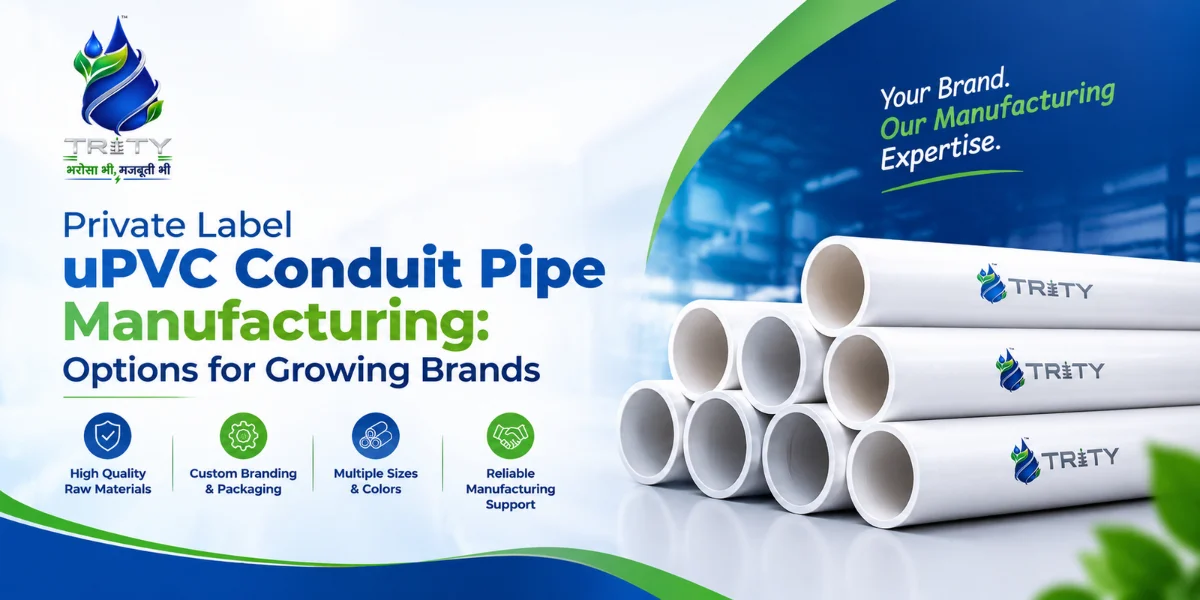
A growing hardware, electrical, or building materials brand considering a private label conduit pipe range faces a genuinely different set of questions than a dealer deciding which existing brand to stock. This is about putting your own name on a manufactured product, which means the manufacturing partner you choose becomes an extension of your brand's reputation, not just a supplier.
What private label manufacturing actually means for conduit pipe
Private label manufacturing means a manufacturer produces conduit pipe to your specification, sized, graded, and packaged, but sold under your brand name rather than the manufacturer's own. This is distinct from simply becoming a dealer for an established brand, where you're selling someone else's name alongside their product; here, your business takes on the branding, and in most cases, the market-facing responsibility for the product's reputation.
Why a brand might consider this route
A hardware retailer, electrical wholesaler, or building materials company with an established customer base and brand trust sometimes sees an opportunity to capture more margin and build brand loyalty by offering conduit under their own name rather than reselling a third-party brand their customers could just as easily buy elsewhere. This is a genuine strategic option, but it comes with responsibilities that simply stocking an established brand doesn't carry.
What changes versus selling an established brand's product
- You take on quality accountability in the market's eyes, even though a manufacturer is actually producing the material. If a private label product underperforms, your brand absorbs that reputational cost directly, not the manufacturer's name.
- You need genuine technical competence to specify the product correctly, since you're no longer simply choosing between an existing brand's published product range; you're involved in specifying grade, sizing, and compound requirements for your own line.
- Marketing and customer trust-building starts from your own brand, without the benefit of an established manufacturer's existing market reputation and track record that a dealer selling a recognised brand gets to lean on.
Certification and compliance considerations specific to private label
This is one of the more important and sometimes overlooked details in a private label arrangement. BIS/ISI certification in India is typically licensed to the actual manufacturer of record, not automatically transferable to a brand name printed on the product.
- Confirm exactly how certification is handled for a private label arrangement: whether the product carries the manufacturing partner's BIS licence with your brand name as a secondary mark, or whether a separate licensing arrangement is needed for your brand specifically
- Understand this isn't a detail to leave until after the arrangement is set up. Getting clarity on certification structure before committing avoids a situation where your branded product can't legitimately carry the ISI mark your customers expect
- Verify the manufacturing partner's own certification is current and genuinely valid, since your brand is only as compliant as the actual production behind it
What to evaluate in a contract manufacturing partner
- Proven manufacturing capability and existing certification, since you're relying entirely on their production quality and compliance standing, not building your own
- Willingness to work at your required volume, since private label arrangements typically require a meaningful minimum order commitment given the setup involved in producing to a distinct specification and packaging
- Flexibility on packaging and branding, confirming the manufacturer can actually produce to your specific branding requirements, not just a generic product with your logo added as an afterthought
- Clear, documented terms on quality responsibility, establishing what happens if a quality issue arises after the product is in the market under your brand name
Realistic expectations before pursuing this route
Private label conduit manufacturing is a genuine option for an established brand with real market presence and the capital to commit to meaningful minimum volumes, but it's not a shortcut to building a brand from nothing. The manufacturing quality, certification structure, and your own technical competence to specify the product correctly all need to be solid before your name goes on the packaging, since customers buying a private label product are trusting your brand specifically, with less awareness of or access to information about who actually manufactured it.
If you're evaluating this route, start with a direct conversation with potential manufacturing partners about certification structure and minimum volumes before committing to a broader business plan around it.
Trity Pipes has the manufacturing capability and certification standing to support private label and contract manufacturing conversations for established brands considering this route, building on our existing uPVC conduit pipes and fittings range. Contact our team to discuss your requirements and understand what's genuinely feasible for your volume and timeline.
A step-by-step path from enquiry to first production run
A private label project is more likely to succeed when both sides follow a clear sequence.
- Define your range. Decide which sizes, grades, and applications your brand will cover, and why, based on what your customers actually buy.
- Open the conversation with a manufacturer. Share your expected volumes, target market, and timeline, and ask about minimum quantities, certification structure, and lead times.
- Agree the technical specification. Confirm the standard, grade, wall thickness, colour, and any specific requirements in writing.
- Approve samples. Review samples for dimensions, finish, marking, and packaging before any production order is placed.
- Finalise commercial terms. Cover pricing, minimum order quantities, payment terms, delivery, and quality responsibilities in a written agreement.
- Run a first production batch. Inspect it carefully and capture lessons before scaling.
- Review and scale. Adjust the range, packaging, and volumes based on what the first batch and early sales teach you.
Skipping steps usually shows up later as a quality dispute or a certification problem that is expensive to fix.
Packaging, print line, and branding considerations
Your brand shows up on the pipe itself, so these details matter more than they might seem.
The print line
Conduit carries a printed marking along its length, typically including the standard, size, grade, and manufacturer details. In a private label arrangement, confirm exactly what that marking will say, how your brand name appears alongside required compliance information, and who is responsible for ensuring it is accurate and legally appropriate.
Packaging and labelling
Decide on bundle sizes, wrapping, and carton or label design early. Packaging often has its own minimum quantities and lead times, and last-minute changes can delay a first run.
Consistency across batches
Your customers will expect each delivery to look and perform the same. Agree tolerances for colour, finish, and marking, and confirm how the manufacturer will maintain them across production runs.
Quality control responsibilities in a private label arrangement
Quality control in a private label setup involves two parties, and the division of responsibility should be explicit.
- The manufacturer is responsible for production quality, in-process checks, and maintaining the certification that applies to the product
- Your brand is responsible for specifying the product correctly, approving samples, and handling customer feedback
- Both sides should agree how complaints are investigated, how batch records are shared, and what happens if a batch fails inspection
It is sensible to retain the right to inspect production and finished goods, and to receive batch test records for each delivery. This protects your brand and gives you evidence if a customer raises a concern. If you want a sense of what verification looks like at the buyer's end, our guide on identifying substandard conduit shows the checks a careful buyer can run.
Is private label the right move for your business?
Private label works best for businesses with an established customer base, enough volume to meet minimums, and the technical confidence to specify and stand behind the product. If those conditions are not yet in place, building volume as a dealer for an established brand first, then revisiting private label later, can be a lower-risk path. Either route can succeed, but the decision should rest on your realistic volumes and capabilities, not on margin alone.
Estimating volumes and minimums realistically
Minimum order quantities are one of the most important practical constraints in private label manufacturing. Before you commit, estimate your likely sales by size and grade over a realistic period, and compare these with the manufacturer's minimums. If your volumes are uncertain, start with a narrower range, concentrating on the fastest-moving sizes, so that each production run is large enough to be economical without leaving you with slow-moving stock. You can expand the range as sales confirm demand.
Protecting your brand
Your name is on the product, so protect it. Register your brand and any logo, keep control of artwork files, and make sure the agreement covers how your marks may be used. Clarify what happens if you end the relationship: whether remaining stock can be sold, whether the manufacturer may produce for others using similar specifications, and how branded material is handled. Thinking about these questions at the start avoids disputes later.
Questions to ask a potential manufacturing partner
Before committing, ask the manufacturer how certification will apply to your branded product, what minimum quantities and lead times apply, and how colour and marking consistency is maintained. Ask who owns tooling or artwork created for your brand, and what happens to it if the relationship ends. Ask how complaints will be handled and what records you will receive with each batch. Ask to see the production floor and speak with the quality team. A transparent partner will answer each of these directly, and the quality of those answers is a good preview of the working relationship ahead.
Frequently Asked Questions
Can any brand put its name on conduit pipe through a private label arrangement?
In principle, yes, but it requires a genuine manufacturing partnership with a capable, certified manufacturer and typically a meaningful minimum volume commitment, not simply an agreement to add a logo to an existing product.
Does private label conduit pipe carry the same ISI certification as the manufacturer's own branded product?
This depends on how the specific arrangement is structured, since BIS licensing is typically held by the actual manufacturer. Confirming exactly how certification applies to a private label product is an essential step before finalising any arrangement, not a detail to assume will work itself out.
What's the main risk of private label conduit manufacturing for a growing brand?
The brand absorbs market-facing accountability for product quality and reputation, even though a third party is actually manufacturing it. If the manufacturing partner's quality or consistency falls short, it's the brand's name, not the manufacturer's, that customers associate with the problem.
Is private label manufacturing a cheaper way to enter the conduit market than becoming a dealer for an established brand?
Not necessarily cheaper upfront, since private label arrangements typically require meaningful minimum volume commitments and don't carry the benefit of an established brand's existing market trust. It can offer better long-term margin and brand-building potential for a business with the capital and market presence to support it properly.
How long does a private label conduit project usually take from enquiry to first delivery?
It depends on specification complexity, sample approval, packaging design, and production scheduling. A clear specification and prompt approvals shorten the timeline considerably, so agree a realistic schedule with the manufacturer at the outset.
Can I change the specification after the first production run?
Minor adjustments are often possible, but changes to grade, wall thickness, or compound may affect certification and pricing. Discuss how changes are handled before signing, so you know what is possible and what it would cost.